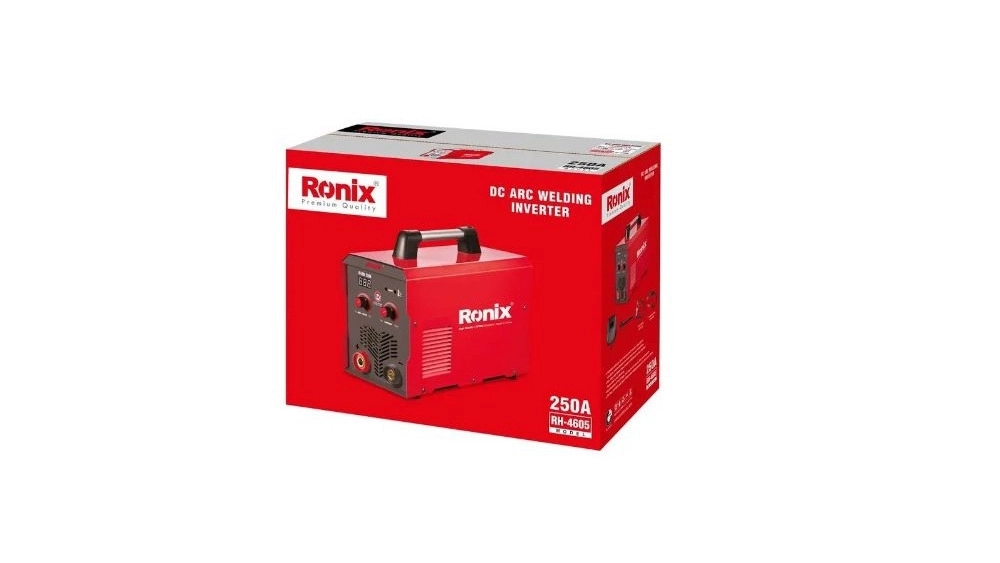
What is a welding inverter?
The welding inverter is one of the latest technologies in the welding industry. Compared to copper or aluminum transformers and rectifiers found in traditional welding machines, advanced silicon technology has been used in the welding inverter. Inverters faced problems in the early years of production, like any other technology; But over time, many of these flaws and problems have been resolved.
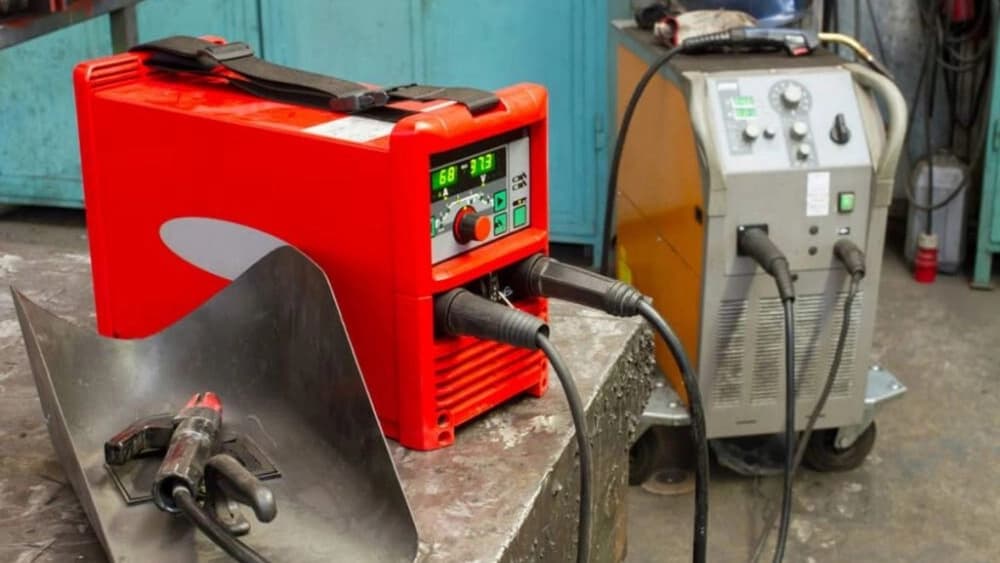
One of the main advantages of the welding inverter is that it is small, compact and somewhat portable, and can be carried around like a light handbag. Inverters use very small transformers; That is why they are compact, light and portable. In contrast, old welding machines are very cumbersome and cannot be used in confined spaces. In addition, inverters consume less electricity and can run on normal household current. Less electricity consumption means that the welding inverter can be connected to the 110 V wall socket with household current.
The inverter welding machine uses the latest advanced silicon technology to electronically control the welding process. This device converts the initial AC current to DC before increasing the current frequency. Finally, it converts it to AC and transfers it to the electrode. The silicon components of this device give it the ability to control frequency increase and current conversion. They also provide features such as overload protection and output power control.
The inverter initially converts the input voltage of 110 to 120 volts into direct current voltage. Then, by increasing the frequency of the power supply from 50 Hz to 10,000 to 30,000 Hz, it converts the direct current voltage into alternating current. This alternating current voltage, which has a high frequency, is finally converted into a direct current voltage with an output of 20 to 50 volts to provide the welding arc.
How the inverter welding machine operates
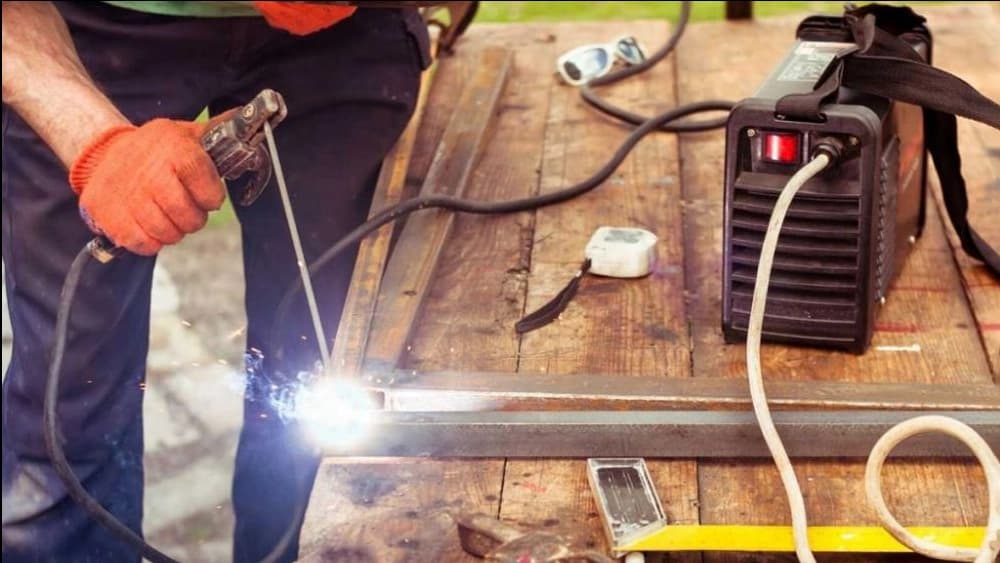
The inverter welding machine converts the alternating current (AC) input into high voltage direct current. The direct current generated passes through an inverter. An inverter is actually a high-frequency oscillator that turns the direct current on and off quickly. This high frequency variation allows precise control of output current and voltage. The inverter changes the output current and voltage according to the settings made by the user. Finally, this adjusted electric current is transferred to the electrode of the device and creates an electric arc between the electrode and the desired surface. The created arc generates intense heat and causes the desired metal surface to melt and weld it.
Benefits of welding inverter
Using a welding inverter has many advantages, some of which we mention in the rest of the article.
1- Small size and portability
Compared to conventional welding machines, one of the main and significant advantages of inverter welding is its small size. For example, a small five-kilogram welding inverter is easily portable, but the same device is capable of providing the same output as a 50-kilogram transformer device.
More efficiency
Inverter welding machines have an efficiency of about 80 to 90 percent. In comparison, older welding transformers are only 50% efficient. The lower efficiency of older devices is because larger transformers have more resistance, which leads to energy loss through heat.
2- Fixed output current and arc control
Inverter welding devices are less sensitive to voltage and temperature changes. In alternating current welding devices, due to the change of current and voltage direction, the electric arc turns off and on about 100 to 120 times per second. These devices do not have a continuous and continuous arc and have less welding power; But inverter devices have arc control capability by using constant current generation. Due to this capability, welding spatter will be reduced and the surface of the work piece will be cleaner after welding. Compared to the old electric arc welding, the inverter has better control over the electric arc; Therefore, due to the stability and ease of controlling the electric arc, the inverter makes more durable welds.
More performance cycle
Because of the small size of inverter devices, you can have more duty cycle. The smallness of the welding inverter components leads to their heating up quickly, but on the other hand, this feature makes them cool down faster and ready to be reworked; But in conventional transformer devices, the components are larger, so they retain more heat and take longer to cool down.
2- Consumption of less electricity
A welding inverter can use 110V household current, while older welding machines require a 220V power supply. To work with the inverter, you can use any outlet you have at home; Therefore, the inverter will consume less electricity and will be more affordable in terms of electricity costs. You can also use several welding inverters without worrying about damaging your electric fuse.
Cooling capability
The internal parts of the welding machine can become hot, especially if it has been running for several hours. If the device is still used while it is hot, it can lead to the failure of some parts and reduce the life of the device; But the welding inverter has a cooling fan that reduces its heat and protects the internal parts.